
How Good Is the Internet in Vietnam?

That said, Vietnam is not one single network experience. Hanoi, Ho Chi Minh City, Da Nang, Nha Trang, Hue, Hoi An, Can Tho, and Phu Quoc usually have reliable 4G and increasingly available 5G in central areas. But if your itinerary includes Ha Giang Loop, Sapa villages, Phong Nha caves, national parks, remote beaches, or island boat trips, signal can change from excellent to weak within a few kilometers. This is where choosing the right network matters more than simply buying the cheapest data package.
1. Which Local Carriers Are Fastest in Vietnam?
For tourists, Vietnam’s main mobile networks are not just “fast or slow.” They each have slightly different strengths depending on where you travel, how much you move around, and whether you care more about raw speed or stable coverage on the road.
| Network provider | Network type | Coverage / availability benchmark | Average speed benchmark | Tourist destination coverage |
| Viettel | 4G LTE, expanding 5G |
|
| Strong choice for Hanoi, Ho Chi Minh City, Da Nang, Ninh Binh, Ha Long, Hue, Hoi An, Mekong Delta, Phu Quoc, and many countryside routes. Often the safest network for Ha Giang, Sapa, mountainous roads, and long intercity transfers. |
| VinaPhone / VNPT | 4G LTE, expanding 5G |
|
| Good for classic tourist routes such as Hanoi–Ninh Binh–Ha Long, Da Nang–Hoi An–Hue, Ho Chi Minh City–Mekong Delta, Nha Trang, and Phu Quoc. |
| MobiFone | 4G LTE, expanding 5G |
| Opensignal Download Speed Experience: 49.3 Mbps, almost equal to Viettel in the same report. | Good in Hanoi, Ho Chi Minh City, Da Nang, Nha Trang, Phu Quoc, airports, malls, hotels, and dense tourism zones. Less ideal as the only network for very remote mountain or countryside routes. |
These benchmarks are useful, but they do not mean every street corner in Vietnam behaves exactly like the national average. In real travel situations, Viettel is usually the safer bet for coverage-heavy routes, while VinaPhone and MobiFone can perform very well in cities and tourist centers.
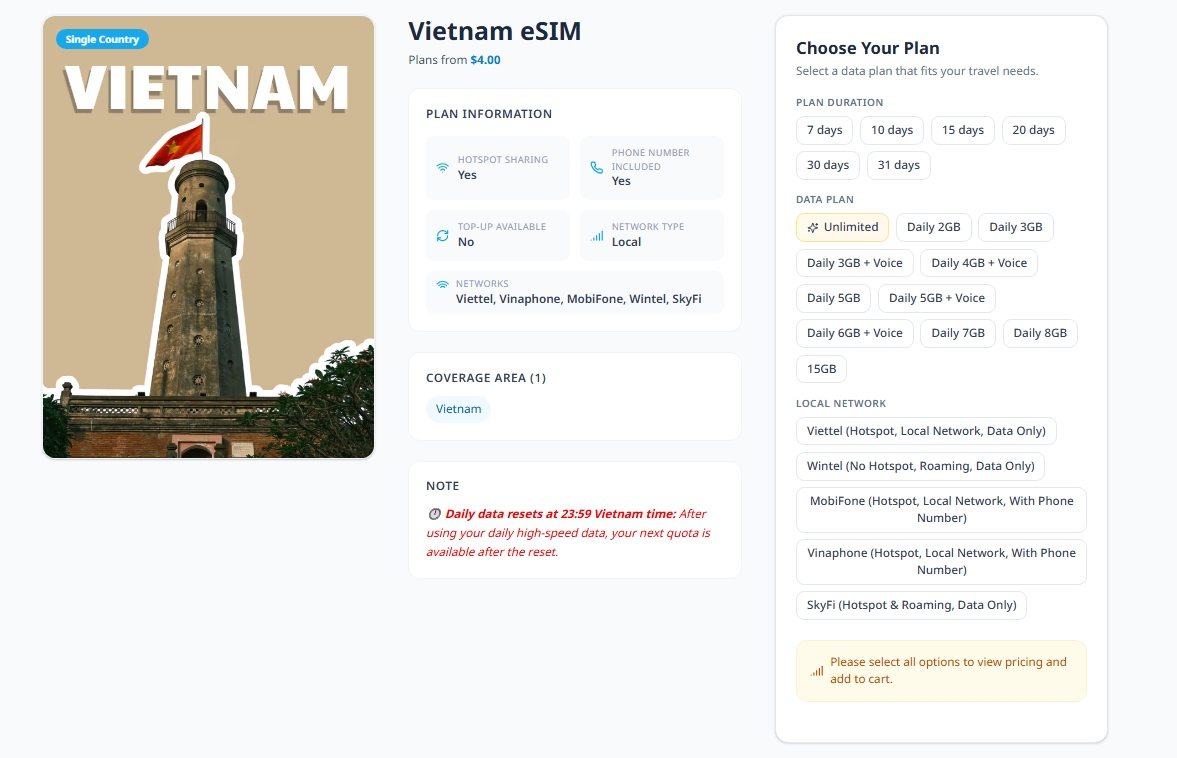
Traveler tip from Vietnam: If your trip includes both cities and rural stops, a multi-network eSIM can be more practical than locking yourself into one carrier. Teclapi’s Vietnam eSIM is designed around local Vietnam connectivity and can support access through major networks such as Viettel, VinaPhone, MobiFone and local MVNO partners including Wintel and SkyFi, depending on the selected plan/profile. That matters in Vietnam because the best signal in Hanoi Old Quarter may not be the same as the best signal on a mountain road in Ha Giang.
2. Is Free WiFi in Vietnam Enough for Tourists?
Free WiFi is everywhere in Vietnam, especially if there is coffee involved. It is useful, but it should be treated like a friendly backup, not your main travel connection.
You can usually find free WiFi in:
- Hotels, homestays, and hostels, though speeds can drop when many guests are online at night.
- Cafes and restaurants, especially in Hanoi, Ho Chi Minh City, Da Nang, Hoi An, Nha Trang, and tourist towns.
- Airports, including Noi Bai, Tan Son Nhat, Da Nang, Cam Ranh, and Phu Quoc.
- Shopping malls, coworking spaces, and some public areas, mostly in larger cities.
- Some transport hubs and metro/public transit areas, depending on the city and station.
The main issue is timing. Free WiFi is easy when you are already inside a café; it is less helpful when you are outside the airport, trying to book a Grab, while your hotel address is saved in an email you cannot load. Public WiFi can also require login pages, local phone verification, or repeated reconnection, so it is best used for casual browsing rather than banking, passport uploads, or travel documents.
What Are the Best Ways to Get Internet in Vietnam for Tourists?
Vietnam gives travelers four realistic options: international roaming, local physical SIM card, pocket WiFi, and travel eSIM. All four can work, but the best choice depends on your arrival airport, itinerary, phone model, data needs, and how much setup you want to handle after a long flight.
| Option | Setup | Price | Data speed | Convenience | Hotspot/tethering | Keep home number | Best for |
| International roaming | Turn on roaming with your home carrier before or after arrival. | Usually the most expensive option, often charged by day or by usage. | Can be good, but depends on your home carrier’s roaming partner in Vietnam. | ★★★★☆ | Usually yes, but some carriers restrict it. | Yes | Very short trips, business travelers, or emergency backup. |
| Local physical SIM card | Buy at an airport kiosk, official carrier store, or authorized reseller. Passport registration is usually required. | Often affordable, but tourist packages and airport pricing can vary. | Usually strong if you choose Viettel, VinaPhone, or MobiFone. | ★★★☆☆ | Usually yes, depending on plan. | Not on the same SIM slot unless your phone supports dual SIM. | Long stays, budget travelers, or visitors who need a Vietnamese phone number for calls/SMS. |
| Pocket WiFi rental | Reserve online or rent locally, then pick up and return the device. | Moderate to high after rental days, deposit, delivery, or late-return fees. | Good when signal is strong, but shared across devices. | ★★☆☆☆ | Yes, this is the main purpose. | Yes | Families, tour groups, laptop users, or travelers with phones that do not support eSIM. |
| Travel eSIM | Buy online, receive a QR code by email, and install before departure or on WiFi. | Usually affordable, with flexible daily, total-data, or unlimited-style plans. | Strong when connected to quality local networks. | ★★★★★ | Usually yes, but check plan terms. | Yes, because your home SIM can stay active. | Most modern travelers, airport arrivals, multi-city routes, and anyone who wants data ready immediately. |
For most tourists visiting Vietnam, eSIM is the most comfortable balance. You can install it before departure, keep your home number active for banking OTP or WhatsApp, and use Vietnam mobile data for maps, Grab, hotel check-ins, translation, social media, and travel research. It removes the small but annoying arrival tasks: finding the right kiosk, comparing packages while tired, handing over your passport, and hoping the SIM is registered correctly.
Tip for choosing the right Vietnam eSIM: Match the plan to how you actually travel. Choose Daily Data if your usage is steady every day, Total Data if some days are light and others are heavy, and Unlimited-style data if you plan to use hotspot, video calls, streaming, or work apps often. Also check hotspot rules, eSIM compatibility, and whether the plan includes a local number if you need one.
Teclapi eSIM for Vietnam: Is It Worth It for My Trip?
Before buying any eSIM, check that your phone is eSIM-compatible and carrier-unlocked. Most recent iPhone, Google Pixel, and Samsung Galaxy models support eSIM, but some market versions do not. A locked phone may reject a travel eSIM even if the model itself supports eSIM.
Airport SIM kiosks in Vietnam are useful, but they still involve in-person passport registration, possible queues, and plan explanations that may not always be clear in English. After a night flight into Ho Chi Minh City or Hanoi, the simpler option is to have your mobile data ready before you reach the arrivals hall.
Teclapi is based in Vietnam, which gives its Vietnam eSIM a more local angle than a generic global data plan. It is built for real travel behavior in Vietnam: airport pickup, Grab rides, Zalo or WhatsApp messages, Google Maps, hotel check-ins, café hopping, intercity transfers, and sudden “can we change the itinerary?” moments.
With Teclapi Vietnam eSIM, travelers can expect:
- Vietnam-focused connectivity: suitable for common routes such as Hanoi, Ninh Binh, Ha Long, Da Nang, Hoi An, Hue, Ho Chi Minh City, Mekong Delta, Nha Trang, and Phu Quoc.
- Access to strong local network options: designed to connect through major Vietnam mobile networks and selected local MVNO partners, depending on the plan/profile.
- Plans from just $4: affordable enough for short trips, layovers, and first-time visitors who only need reliable mobile data.
- QR code delivery by email: buy online, receive the QR code, and install it before departure or while connected to WiFi.
- Useful support channels in Vietnam: WhatsApp, Zalo, Facebook, and email support are available if setup does not go as planned.
- A practical choice for airport arrival: no plastic SIM swap, no kiosk queue, no need to start the trip with paperwork.
Teclapi is not the only way to get internet in Vietnam, and travelers who need heavy local calling may still prefer a registered physical SIM. But for data-first travelers who want to land ready for maps, rides, translation, and booking updates, a Vietnam eSIM is usually the cleaner choice.

How Much Data Do I Need for Vietnam Trip?
It is easy to under-buy data in Vietnam because many travel moments quietly depend on your phone. You may not stream movies every day, but you will probably use maps, Grab, translation, restaurant searches, weather checks, booking apps, photo uploads, and messages throughout the trip.
| If you're | Daily usage | Typical Vietnam activities | 7-day trip estimate | Suggested Teclapi plan style |
| Light user | 300MB–700MB/day | Messaging, Grab, Google Maps, checking hotel bookings, light browsing, occasional photo sharing. | 2GB–5GB | Total Data plan for a short and simple trip. |
| Average traveler | 1GB–2GB/day | Maps, translation, social media, restaurant searches, booking changes, short videos, photo uploads. | 7GB–14GB | Daily Data or medium Total Data plan. |
| Heavy user | 3GB–5GB/day | Instagram/TikTok, YouTube, frequent uploads, video calls, cloud backup, hotspot for another device. | 20GB–35GB | Larger Total Data or Unlimited-style plan. |
| Digital nomad | 5GB–10GB+/day | Laptop hotspot, Zoom/Meet calls, cloud tools, file uploads, streaming, work apps. | 35GB–70GB+ | Unlimited-style plan, plus hotel or coworking WiFi as backup. |
Vietnam-specific data use can be surprisingly active. A normal day might include booking a Grab Bike, checking the best bánh mì nearby, translating a menu, uploading photos from Hoi An, checking train times, sending hotel messages, and using maps for walking directions. None of these tasks feels heavy alone, but together they add up.
A simple local tip: Download offline Google Maps for your first destination before flying. Hanoi, Ho Chi Minh City, Da Nang–Hoi An, Ninh Binh, Ha Long, Phu Quoc, and Ha Giang are all worth saving in advance. Offline maps do not replace live traffic, but they help reduce data use and give you a backup when the signal becomes weak outside city centers.
What Are Practical Tips for Staying Connected in Vietnam?

A good internet setup in Vietnam is not only about buying the right plan. It is also about avoiding the small connection problems that happen during airport arrivals, mountain roads, crowded festivals, and long travel days.
- Install your eSIM before departure, but read the activation rule carefully. Some plans start when installed, while others start when first connected to the local network. Install on stable WiFi, then follow the plan instructions so you do not waste validity before landing.
- Keep your home SIM active for banking OTP and important apps. Many travelers still need their home number for bank verification, airline changes, or account logins. With eSIM, you can keep your home SIM in the phone and set mobile data to the Vietnam eSIM.
- Use Viettel-priority coverage thinking for remote routes. If your itinerary includes Ha Giang, Sapa villages, Phong Nha, national parks, or long countryside transfers, coverage matters more than peak speed. In these areas, the best plan is the one that stays connected, not the one with the prettiest speed claim.
- Download offline maps before mountain or island trips. This is especially useful for Ha Giang Loop, Sapa, Pu Luong, Phong Nha, Cat Ba, Con Dao, and remote beaches. Mountains, caves, ferries, and thick concrete buildings can still affect signal.
- Do not rely only on airport WiFi for your first ride. Airport WiFi may work, but login pages and crowds can make it unreliable. Having mobile data ready is much easier when booking Grab or messaging your hotel pickup driver.
- Expect slower speeds during festivals and crowded nights. Da Nang fireworks season, Hoi An lantern nights, Tet holiday travel, countdown events, and busy beach weekends can create network congestion. If speeds drop, walking away from the crowd can help more than restarting your phone repeatedly.
- Carry a power bank on full-day trips. Navigation, translation, camera use, and ride-hailing drain battery quickly, especially in Vietnam’s heat. A good data plan is not very useful if your phone gives up before dinner.
Seasonal travel tip: If you are visiting Da Nang during DIFF 2026, the official Da Nang International Fireworks Festival runs from May 30 to July 11, 2026, with six fireworks nights along the Han River. Expect crowded riverside areas, heavier Grab demand, and possible mobile network congestion before and after the shows. Install your eSIM before arriving in Da Nang, download offline maps, save your hotel address, and arrange your return route early. Fireworks nights are beautiful, but trying to load a map with thousands of people around you is not the most romantic part of the evening.
So, What Is the Easiest Internet Option for Vietnam?
Vietnam is easy to explore when your phone is connected from the beginning. International roaming is simple but often expensive, local SIM cards are affordable but require in-person registration, pocket WiFi works for groups but adds another device to manage, and eSIM gives most travelers the best mix of convenience, control, and arrival-day comfort.
If you want to step out of the airport ready to book a ride, message your hotel, open maps, and find your first bowl of phở without searching for a SIM counter, a Teclapi Vietnam eSIM is a practical choice. Choose the right data style for your trip, install before departure, and let Vietnam be the adventure — not the phone setup.