
Every July, Kyoto transforms into something that feels centuries removed from the modern city you step off the Shinkansen into. The streets close. Enormous wooden towers draped in ancient tapestries appear between the neighborhoods. A melody that has echoed through these same alleys for over a thousand years drifts through the summer heat. If you're heading here for Gion Matsuri 2026, you're in for one of Asia's most extraordinary travel experiences — and this guide covers what you need to know, including how to stay connected so nothing gets in the way of the moment.
A Festival Born from a Plague - The Story Behind Gion Matsuri
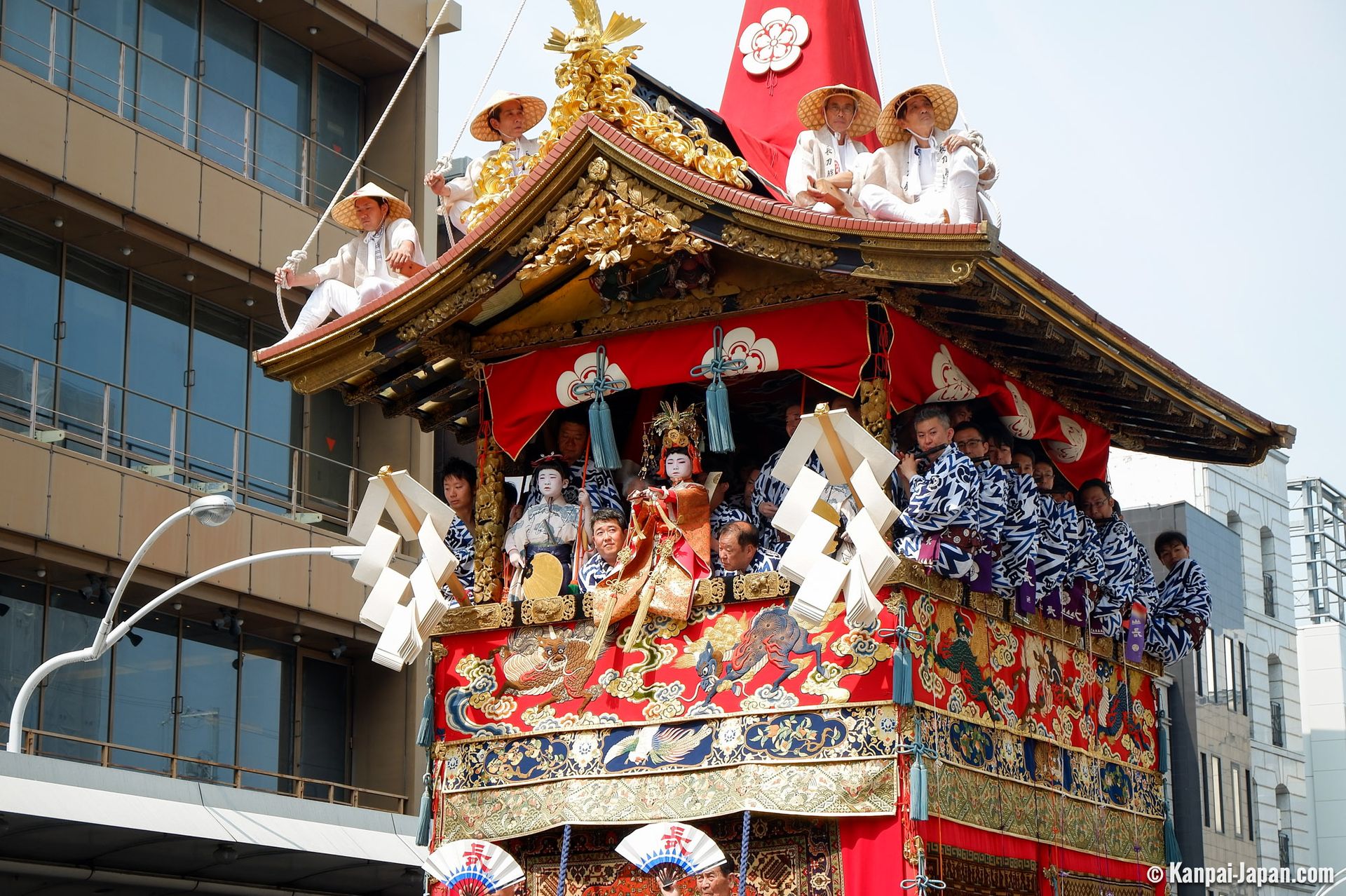
It started not as a celebration, but as a plea. In 869 AD, a devastating epidemic was sweeping across Japan. The people of Heiankyo — the city now called Kyoto — organized a great procession to appease the gods, erecting 66 sacred spears to represent every province of the country. The plague eased. The ritual was repeated the following year, and the one after that.
More than 1,150 years later, it hasn't stopped. Gion Matsuri survived civil wars, fires, and centuries of upheaval. The neighborhoods of Kyoto still assemble the same enormous wooden floats — by hand, without a single nail — dress them in tapestries that arrived via the Silk Road from Persia and Belgium in the 16th century, and pull them through the streets every July. UNESCO recognized the float ceremony as an Intangible Cultural Heritage in 2009. Once you're standing next to one of those floats on a warm July evening, looking up at a structure the height of a building, and realizing the textile in front of you is 500 years old — the designation starts to make sense.
Gion Matsuri at a Glance
The festival runs the entire month of July, split into two halves: Saki Matsuri (first half, peaks July 14–17) and Ato Matsuri (second half, peaks July 21–24). The action concentrates around the two parade days, but the Yoiyama evenings before each one are just as worth your time.
| Date | Event | Crowd Level |
| July 10–15 | Float assembly — teams build yamaboko in the streets without nails | Low — great for a slow morning walk |
| July 14–15 | Yoiyama evenings — lanterns lit, streets pedestrianized, food stalls 6–11pm | Moderate |
| July 16 | Peak Yoiyama — Shijo and Karasuma closed, full street festival atmosphere | Very High |
| July 17 | Yamaboko Junko (Saki Matsuri) — 23 floats, parade 9am–1pm | Extreme |
| July 21–22 | Ato Matsuri Yoiyama evenings — quieter, more local feel | Moderate |
| July 23 | Second Yoiyama peak | High |
| July 24 | Yamaboko Junko (Ato Matsuri) — 11 floats, 9:30–11:50am | High |
| July 28–31 | Mikoshi return procession + Nagoshi-sai closing ceremony | Low |
The Ato Matsuri parade on July 24 is the underrated option — fewer floats, far more manageable crowds, and you'll actually be able to see the floats rather than the backs of other people's heads. If you can stay for both parades, do. They feel noticeably different.
Traveler's tip: The float assembly period (July 10–15) is one of the most overlooked parts of the festival. Neighborhood teams work in the streets and you can walk right up and watch — no crowds, no tickets, just craftsmen doing something extraordinary.
What Makes Gion Matsuri 2026 Special
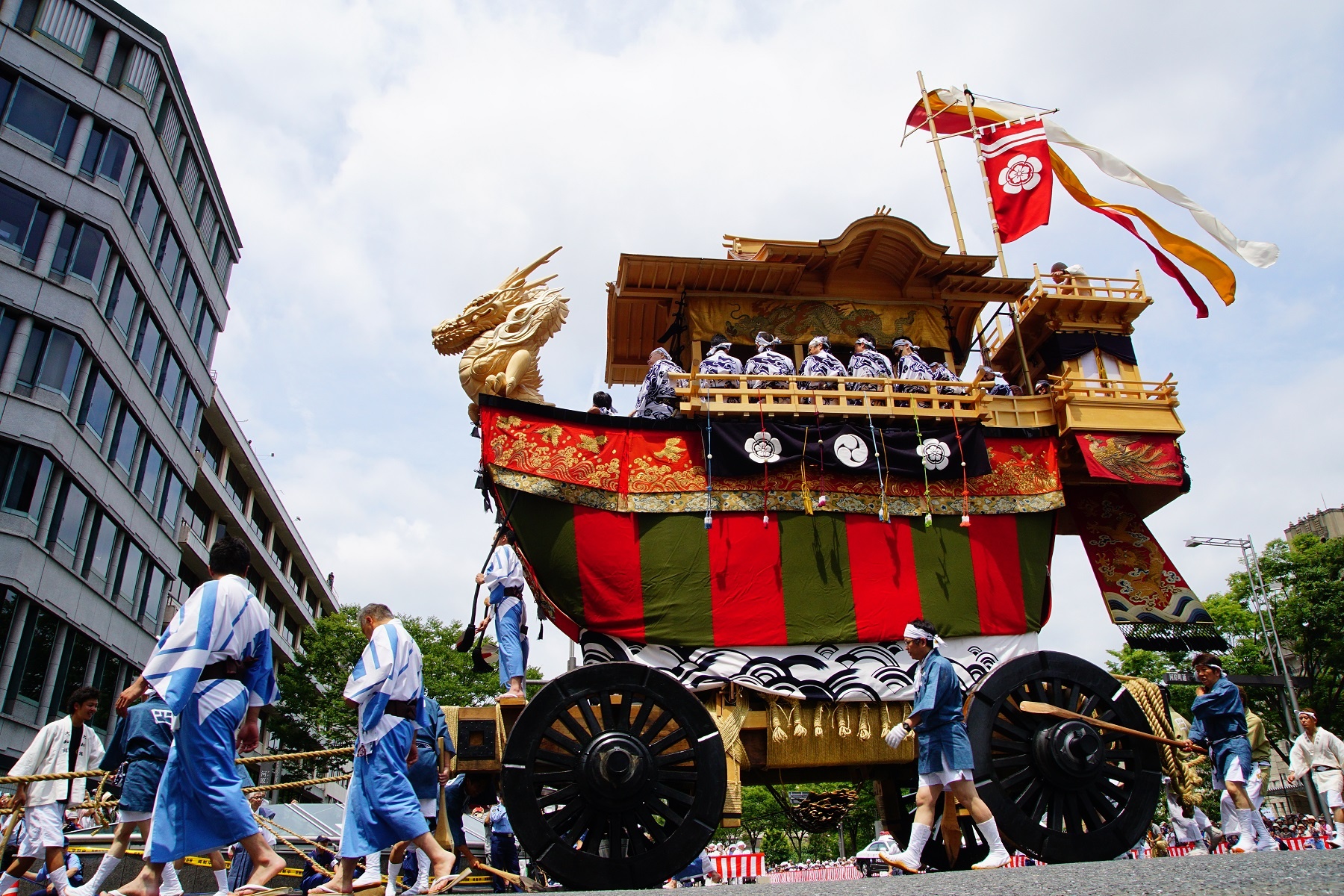
Many festivals have parades, food stalls, and traditional performances. Gion Matsuri has all of those too, but what makes it memorable is the scale, craftsmanship, and sense of continuity. Some of the traditions you'll see this July have remained largely unchanged for centuries, preserved by the same Kyoto neighborhoods generation after generation. If you're visiting for the first time, these are the moments most travelers remember long after they leave Japan.
1. The Yamaboko Floats - 500 Years of Craft on Wheels
The 33 yamaboko divide into two types: massive hoko, towering up to 25 meters and weighing up to 12 tonnes, pulled through the streets on wheels by teams using thick rope; and smaller yama, carried on poles by hand. Every single one is assembled without nails, using rope-binding techniques passed down through Kyoto's neighborhoods over generations.
The tapestries are remarkable in their own right, some are designated Important Cultural Properties of Japan, others were imported from Persia and Belgium five centuries ago. Material that would sit behind glass in a European museum ride down Oike-dori once a year, swaying in the summer heat.
2. The Tsuji-mawashi - The Moment That Stops the Crowd
Position yourself at an intersection, not a straight stretch of the route. At each major corner, a hoko must pivot 90 degrees with no steering mechanism, no engine, no hydraulics. Teams place bamboo poles and wet bamboo leaves under the front wheels and pull in slow, coordinated sequences until the float rotates. The crowd goes quiet. It takes several minutes. Then it moves.
It is rope, bamboo, and centuries of collective technique — and there's genuinely nothing else like it.
3. The Yoiyama Evenings - Where the Festival Actually Lives
The three evenings before each parade (July 14–16 and 21–23), the streets around Shijo and Karasuma close to traffic from 6–11pm. Floats are lit with paper lanterns and stationed in their neighborhoods - accessible, open, and astonishing up close. Food stalls line the route: yakitori, takoyaki, kakigori, cold beer. Locals walk in yukata. Some families open their traditional machiya townhouse fronts to display heirloom lacquerware and ancient screens — a quiet tradition called byobu matsuri that most visitors walk straight past without noticing.
July 15 gives you about 80% of the July 16 atmosphere at half the crowd. Worth knowing if you want to pace yourself.
Staying Connected During Gion Matsuri
📍 Know Before You Go: With hundreds of thousands of visitors filling central Kyoto during the busiest festival days, reliable mobile data can make navigating the festival much easier. Walking routes change throughout the day, stations become crowded after major events, and it's surprisingly easy to lose track of friends in the crowds. If you're still planning how to stay connected during your trip.
Japan consistently ranks among the world's best for mobile network quality, and Kyoto holds up that reputation. You'll find solid 4G LTE and 5G coverage throughout the festival area — the parade route, Yasaka Shrine, and the Yoiyama streets all included. Expect download speeds around 80–100 Mbps in normal conditions.
On the busiest evenings, congestion kicks in when 200,000 people crowd into a few blocks. Navigation and messaging stay reliable; streaming and uploading slow down. The practical move: download offline maps for Kyoto before you leave your hotel each morning — cached navigation loads faster when the network is under pressure.
For data sorted before you travel, Teclapi's Japan eSIM runs on Japan's top-tier networks: KDDI (au) and NTT Docomo, with plans starting from $1.40/day. It activates at home, connects automatically when you land, and covers the entire country: Kyoto, Tokyo, Osaka, wherever your trip takes you. No rental counter to queue at, no pocket WiFi device to charge. Just reliable data from the moment you arrive.
If you're still planning how to stay connected during your trip, explore how to choose the right Japan eSIM covers the main options for different travel styles and budgets.

Pack Light, Stay Connected, Enjoy Every Minute
Gion Matsuri earns every superlative written about it — but only if you know how to move through it. Pick your evenings with intention, get to the parade route before the crowd consolidates, and slow down enough to notice the things most visitors walk straight past.
Sort your Japan eSIM before you fly, download your maps before parade day, and then put the phone down as often as you can. Some things are better when you're actually looking at them.
Have a wonderful festival!