
Préparer un voyage à l’étranger implique de prendre des centaines de petites décisions — et la façon dont vous resterez connecté est l’une de celles qu’il est facile de mal gérer. Alors que l’eSIM devient la norme sur la plupart des smartphones modernes, de plus en plus de voyageurs comparent pour la première fois l’eSIM et la carte SIM physique, sans savoir si ce changement en vaut vraiment la peine ou s’il ne s’agit que d’une tendance tech de plus. Les deux options donnent accès aux données mobiles ; ce qui change, c’est l’expérience, la flexibilité et la façon dont chacune s’adapte à votre type de voyage. Ce guide présente les vraies différences pour vous aider à faire le bon choix avant le départ.
Quelle est la différence entre l’eSIM et la carte SIM physique pour voyager ?
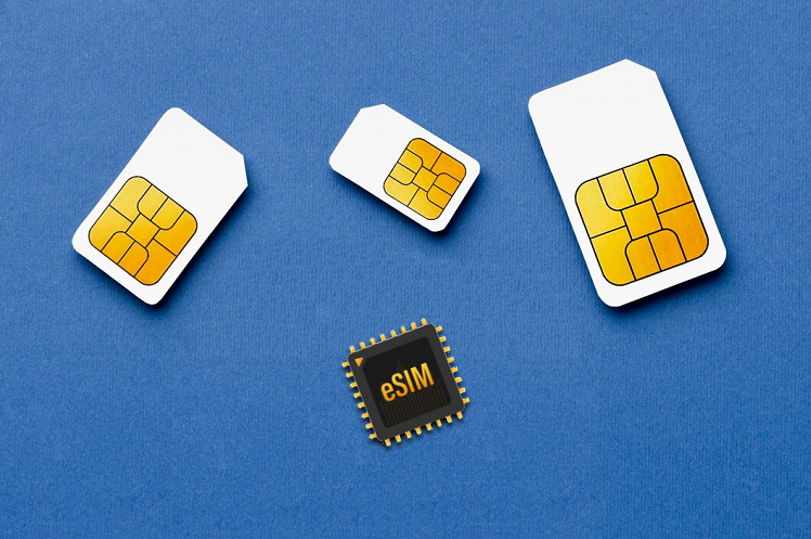
Comprendre ce que représente réellement chaque option rend la comparaison beaucoup plus claire — car même si toutes deux vous donnent accès aux données mobiles à l’étranger, leur fonctionnement est fondamentalement différent. Avant de voir laquelle convient le mieux à votre voyage, voici ce que chacune implique concrètement.
1. Qu’est-ce qu’une carte SIM physique ?
Une carte SIM physique est la petite puce en plastique qui constitue la norme de connectivité depuis des décennies. Vous l’achetez auprès d’un opérateur local — dans un kiosque à l’aéroport, une supérette ou une agence de l’opérateur — vous l’insérez dans votre téléphone, et vous êtes connecté à ce réseau. Elle est universellement compatible avec tout téléphone débloqué et largement disponible dans la plupart des pays du monde.
2. Qu’est-ce qu’une eSIM ?
Une eSIM (embedded SIM) est une puce SIM numérique intégrée directement à votre appareil dès l’usine. Il n’y a aucune carte physique à manipuler. Vous achetez un forfait en ligne, recevez un QR code par e-mail, le scannez avec votre téléphone, et le forfait est chargé sur votre appareil — souvent avant même d’avoir quitté votre domicile. Si vous découvrez encore ce concept, notre guide sur ce qu’est une eSIM de voyage → explique son fonctionnement, les points à vérifier avant l’achat et les appareils compatibles.
Alors, quelle est la différence entre une carte SIM traditionnelle et une eSIM ?
Le tableau ci-dessous compare les deux options selon les critères les plus importants en voyage :
| SIM physique | eSIM | |
| Mise en place | Achat en magasin ou à l’aéroport | Achat en ligne, scan du QR code |
| Temps d’activation | 15–60 minutes | Instantané |
| Gamme de prix | Faible à moyenne | Faible à moyenne |
| Compatibilité appareil | Universelle (tout téléphone débloqué) | La plupart des flagships depuis 2020 |
| Usage multi-pays | Une SIM par pays | Plusieurs profils sur un seul appareil |
| Conserver son numéro principal actif | Non | Oui — dual SIM |
| Risque de perte ou de dommage | Oui | Non |
| Impact environnemental | Déchets plastiques | Aucun |
| Idéal pour | Longs séjours, une seule destination | Courts séjours, multi-pays, voyageurs fréquents |
En matière de prix, les deux options sont en réalité plus proches que la plupart des voyageurs ne l’imaginent. Les kiosques SIM dans les aéroports appliquent généralement des tarifs 30 à 50 % plus élevés que ceux des opérateurs — ce qui signifie qu’une SIM annoncée à 10 $ peut discrètement coûter 15 à 20 $ une fois activée. Les forfaits eSIM s’achètent en ligne au prix affiché, sans surcoût lié au lieu d’achat. Pour les voyages de moins d’un mois, l’écart de prix est souvent négligeable une fois cette majoration aéroportuaire prise en compte.
Conseil voyageur : L’un des avantages les plus pratiques — et les plus souvent négligés — de l’eSIM est le dual SIM. Avec une eSIM qui gère vos données à l’étranger, l’emplacement SIM physique reste libre pour votre SIM principale. Votre numéro habituel reste actif pendant tout le voyage, ce qui compte pour l’authentification bancaire à deux facteurs, WhatsApp et toute communication professionnelle liée à ce numéro. Cela élimine l’un des problèmes de connectivité les plus fréquents rencontrés par les voyageurs.
Faut-il utiliser une eSIM plutôt qu’une carte SIM locale ?
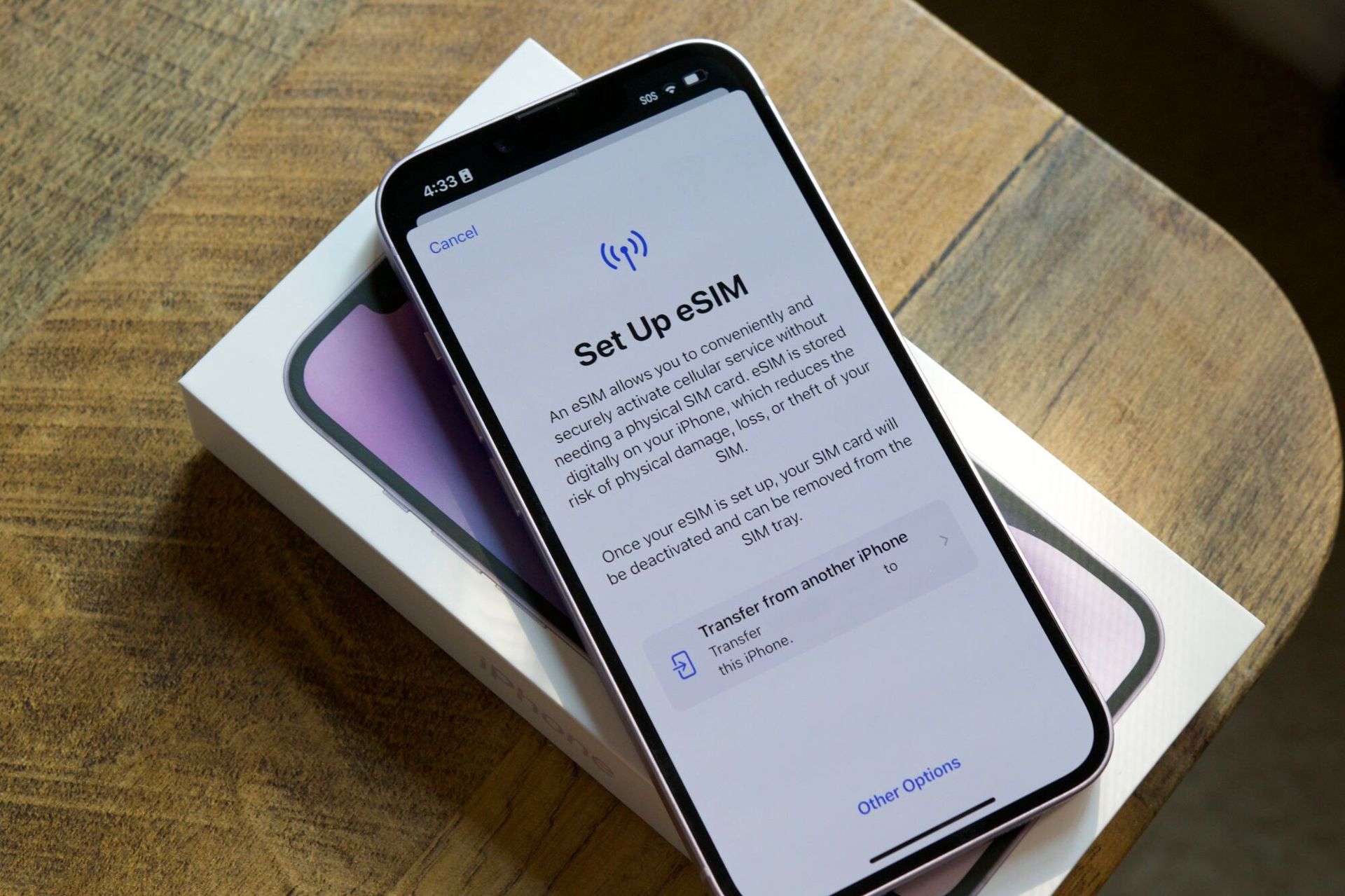
Le passage à l’eSIM n’est pas seulement une préférence des consommateurs — il reflète une évolution plus large dans la façon dont les appareils sont conçus et dont les voyageurs souhaitent se connecter. Comprendre ce contexte permet de mieux voir pourquoi l’eSIM est devenue la recommandation par défaut pour la plupart des voyages modernes.
- L’industrie du voyage évolue vers l’eSIM
Les cartes SIM physiques ne vont pas disparaître du jour au lendemain, mais la direction est claire. Les grands fabricants de smartphones — Apple, Samsung, Google — étendent la prise en charge de l’eSIM à chaque nouvelle génération, et plusieurs modèles récents d’iPhone vendus aux États-Unis ont déjà supprimé le tiroir SIM physique. Les opérateurs en Europe, en Asie et en Amérique du Nord proposent désormais une prise en charge complète de l’eSIM, et les fournisseurs d’eSIM de voyage internationaux ont fortement progressé, tant en couverture qu’en variété de forfaits. Pour les voyageurs, cela signifie que l’eSIM n’est plus une option de niche — elle devient progressivement la norme attendue.
- La plupart des appareils modernes prennent déjà en charge l’eSIM
La compatibilité, qui était autrefois la raison principale de rester sur une SIM physique, n’est plus vraiment un problème pour la majorité des voyageurs. Tous les iPhone à partir du XS, les Samsung Galaxy des séries S et Z à partir de 2020, ainsi que les Google Pixel à partir du Pixel 4 prennent en charge l’eSIM. C’est aussi le cas de la plupart des modèles haut de gamme actuels chez d’autres fabricants. Si votre téléphone a été acheté au cours des trois ou quatre dernières années et qu’il ne s’agit pas d’un modèle d’entrée de gamme ou budget, il y a de fortes chances que l’eSIM soit déjà disponible sur votre appareil.
L’exception principale reste les téléphones bloqués par l’opérateur. Si votre appareil a été acheté directement auprès d’un opérateur dans le cadre d’un contrat, il peut être verrouillé sur ce réseau et incapable d’utiliser une eSIM tierce. La plupart des opérateurs acceptent de débloquer les appareils sur demande, souvent sans frais - mais cela doit être fait avant le voyage.
- Les forfaits eSIM de voyage sont pensés pour la façon dont on voyage aujourd’hui
Au-delà de la compatibilité, les forfaits eSIM sont structurés d’une manière qui correspond bien à la réalité de la plupart des voyages internationaux. Séjours courts à moyens, plusieurs pays, réservations de dernière minute et besoin de garder son numéro principal actif, tous ces cas sont gérés de façon plus simple avec l’eSIM qu’avec une carte SIM physique.
Pour un séjour d’un mois ou plus dans un seul pays, les forfaits locaux d’un opérateur sur place peuvent encore offrir de meilleurs tarifs. Pour tout le reste, en particulier les voyages de 3 à 30 jours, l’eSIM reste compétitive en prix et nettement plus pratique à chaque étape.
Comment choisir un forfait eSIM : Vérifiez trois points avant d’acheter. D’abord, confirmez que le forfait couvre bien votre destination précise et regardez à quels réseaux locaux il se connecte - la qualité de couverture peut varier selon les fournisseurs, même dans un même pays. Ensuite, vérifiez s’il s’agit d’un forfait data only ou s’il inclut aussi appels et SMS, et si le volume de données est suffisant pour toute la durée du voyage. Enfin, contrôlez la période de validité : certains forfaits commencent à compter dès l’achat, d’autres à partir de la première utilisation. Comprendre cette différence avant de payer évite les mauvaises surprises à l’arrivée.
Le roaming international vaut-il le coup ?
Certains voyageurs préfèrent éviter complètement ce choix et s’appuyer sur l’option de roaming international de leur opérateur habituel. Pour les voyages très courts, c’est défendable. Pour la plupart des déplacements internationaux, la comparaison des coûts rend cette option difficile à recommander.
Le roaming international offre une simplicité maximale — pas de compte supplémentaire, pas de QR code, aucune configuration ou presque. Mais cette commodité a un coût nettement plus élevé. Le tableau ci-dessous illustre la différence de coût typique pour un voyage de sept jours :
| Option | Coût typique (voyage de 7 jours) | Praticité |
| Roaming de l’opérateur principal | 50–150 $+ | ★★★★★ |
| SIM locale | 5–20 $ | ★★★ |
| eSIM | 5–25 $ | ★★★★★ |
Pour des voyages de deux à trois jours, un long week-end ou un court déplacement professionnel — lorsque le coût total des données reste modeste et que la praticité passe avant tout — le roaming peut avoir du sens. Pour des séjours d’une semaine ou plus, payer cinq à dix fois le prix d’une travel SIM pour un service data équivalent reste difficile à conseiller. Un forfait eSIM entre 5 et 25 $ offre un niveau de praticité comparable sans ce surcoût.
Comment passer à l’eSIM avant votre prochain voyage ?
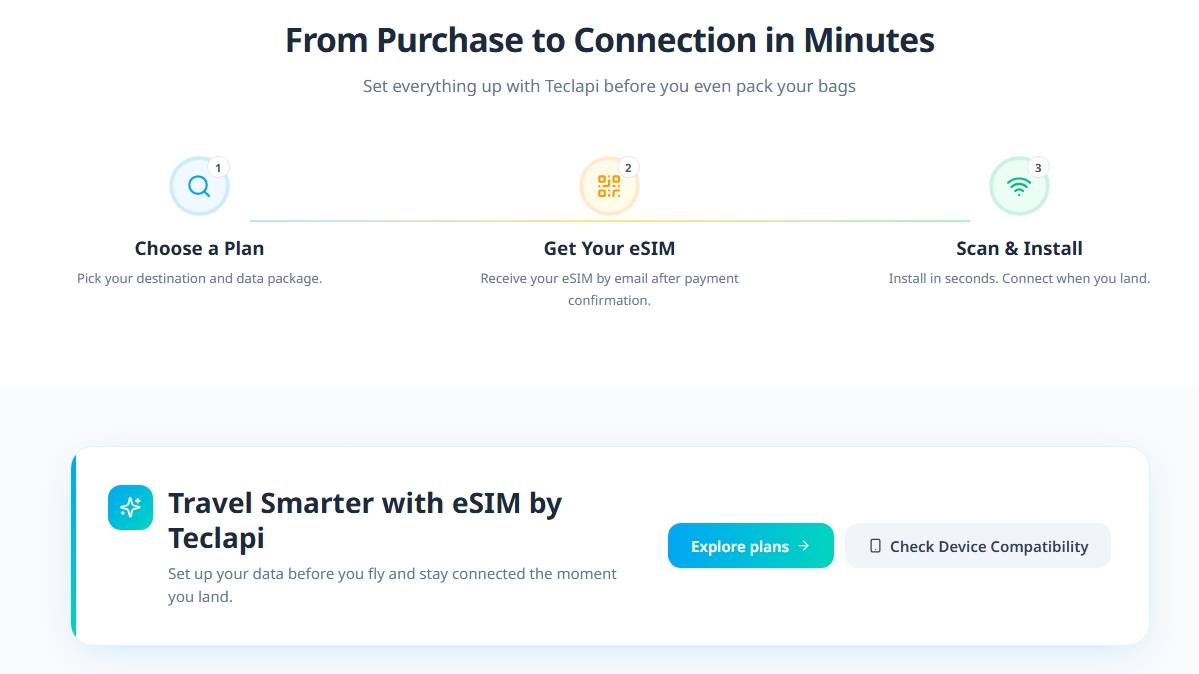
Passer à l’eSIM ne demande aucune compétence technique particulière ni aucun passage en boutique. Pour la plupart des voyageurs, l’ensemble du processus prend moins de dix minutes et peut être effectué depuis chez soi avant le départ. Voici comment cela fonctionne avec Teclapi :
Étape 1 — Choisir un forfait Parcourez les eSIM de Teclapi → par destination, durée de voyage ou volume de données. Les détails de couverture et les prix sont clairement indiqués pour chaque forfait afin que vous puissiez confirmer avant l’achat qu’il correspond bien à votre destination.
Étape 2 — Scanner le QR code Après l’achat, un QR code est envoyé à votre adresse e-mail. Ouvrez l’appareil photo de votre téléphone, scannez le code, et le profil eSIM est téléchargé sur votre appareil. Pas d’application à installer, pas de passage en magasin, pas d’attente.
Étape 3 — Installer et activer Suivez les instructions à l’écran pour installer le forfait. Vous pouvez définir l’eSIM comme ligne de données active immédiatement, ou programmer son activation pour votre arrivée à destination. Votre SIM principale reste active en parallèle pendant tout le voyage.
Conseil eSIM : Installez votre eSIM avant de quitter la maison, pas à l’aéroport. Disposer de données dès l’atterrissage — pour la navigation, les applications de transport ou la confirmation d’hébergement — supprime l’un des moments les plus stressants d’une arrivée à l’étranger.
Conclusion
Pour la plupart des voyageurs aujourd’hui, la comparaison entre eSIM et carte SIM physique se résume à une seule question : votre voyage correspond-il à ce que l’eSIM fait le mieux ? Pour des séjours d’une semaine ou plus — qu’il s’agisse d’une seule destination ou de plusieurs pays — l’eSIM offre de façon constante une expérience plus flexible, à prix comparable et avec beaucoup moins de friction. Pouvoir activer un forfait avant l’atterrissage, conserver son numéro principal en parallèle et gérer plusieurs profils pays sur un seul appareil répond directement aux principaux points de friction de la connectivité internationale, là où la SIM physique n’a jamais été conçue pour aller aussi loin.
La bonne solution de connectivité reste, au final, celle qui correspond à votre voyage, votre appareil et vos priorités. Ce guide a été conçu pour vous aider à prendre cette décision en toute confiance.
Découvrir les forfaits eSIM Teclapi pour votre destination →